Apple put a 512GB desktop on sale on August 25 and my first reaction was to check how much my own Mac Studio had just lost in trade-in value (don’t look, is my advice). The second was to reopen the question I’ve been asked most since the OpenClaw post: what’s the Mac mini alternative for local LLMs, and is it still a mini PC? The new M6 Mac mini, the M5 Max and M5 Ultra Mac Studio, and a wave of 128GB Strix Halo boxes make that a different question than it was in the spring.
I run a Mac Studio M3 Ultra with 256GB of unified memory as my daily machine. I’m not selling it to buy the new one, and by the end of this I’ll explain which of these boxes I’d tell a friend to buy at four different budgets.
TL;DR
- Memory bandwidth decides token speed on unified-memory machines, and memory size decides which models load at all. Price yourself on those two numbers, not on CPU cores.
- The M6 Mac mini (153 to 170 GB/s, 16 to 32GB) is a great small computer that tops out around 30B-class models at low speed. The M5 Pro Mac mini with 64GB is where Apple’s small box starts to make sense for this.
- A 128GB Strix Halo mini PC ($3,500 to $3,800) and a 64GB Mac Studio M5 Max ($3,499 from Apple, 614 GB/s) are the real fight in the middle, and they cost the same. Strix Halo wins on memory per dollar and on Linux; the Mac wins on bandwidth.
- M5 Ultra starts at $5,499 with 96GB and 1.2TB/s. The 512GB configuration ships in late October.
- My M3 Ultra runs Qwen3.8 27B at 28.8 tokens/s in llama-bench. A Strix Halo box does the same model at about 20 through Ollama, which understates it.
What Apple shipped on August 25
Two press releases, three machines. The Mac Studio announcement covers the M5 Max and the new M5 Ultra; the chip announcement covers M6 in the Mac mini. The specs that matter for inference, pulled from Apple’s own spec pages:
| Machine | Chip | Memory bandwidth | Unified memory | Starting price |
|---|---|---|---|---|
| Mac mini | M6 | 153 GB/s (16GB), 170 GB/s (24 or 32GB) | 16, 24 or 32GB | $879.99 on Amazon |
| Mac mini | M5 Pro | 307 GB/s | 24 to 64GB | $1,669.99 on Amazon |
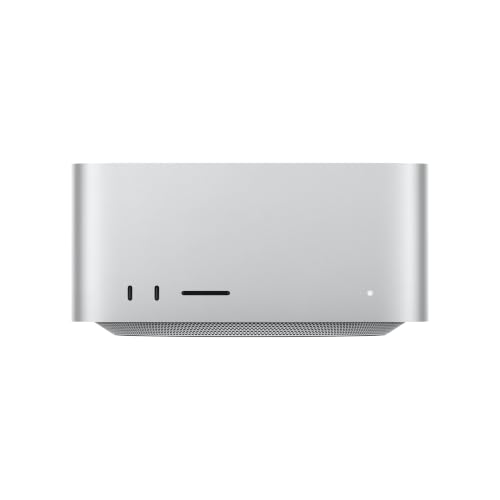
| Mac Studio | M5 Max | 460 GB/s (32-core GPU), 614 GB/s (40-core GPU) | 36 to 128GB | $2,499 (Apple), $2,449.99 on Amazon |
| Mac Studio | M5 Ultra | 1.2 TB/s | 96, 256 or 512GB | $5,499 (Apple) |
Apple’s own line in the chip release is that 1.2TB/s is “50 percent more than M3 Ultra,” which puts my machine at roughly 800 GB/s. The M5 Ultra is also Apple’s first quad-die design, and the Mac Studio press release adds that Thunderbolt 5 lets you cluster several Studios for distributed inference. Pre-orders opened August 25, deliveries start September 22, and the 512GB option lands in late October.
Memory size and memory bandwidth
Every local LLM buying decision on unified-memory hardware comes down to two figures, and neither of them is the CPU.
Memory size decides what loads. A 27B model at Q4 is about 16GB on disk and needs a bit more than that in memory. A 120B-class MoE at Q4 wants 64 to 80GB. The frontier “flash” models that dropped this month run to hundreds of gigabytes at native precision, which is why the 512GB Studio exists.
Memory bandwidth decides how fast tokens come out once the model is loaded. Generation on these machines is bandwidth-bound: every token requires streaming the active weights through the memory bus once. Double the bandwidth and, for a dense model, you roughly double the tokens per second.
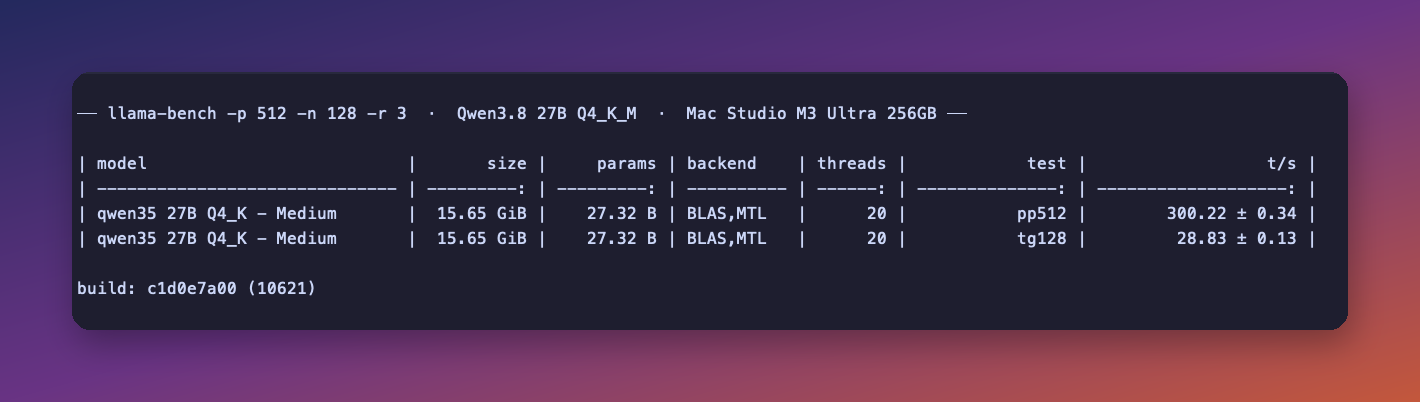
Here’s what that looks like on my M3 Ultra with the model I’ve been living with since the Qwen3.8 post: Qwen3.8 27B at Q4_K_M, 15.65 GiB, straight through llama-bench with the Metal backend.
| Machine | Bandwidth | Prompt t/s | Generation t/s | How it was measured |
|---|---|---|---|---|
| Mac Studio M3 Ultra 256GB (mine) | ~800 GB/s | 300.2 t/s | 28.8 t/s | llama-bench pp512 / tg128, 3 runs, this week |
| Strix Halo (Ryzen AI Max+ 395, 128GB) | ~256 GB/s | 292.5 t/s | 20.4 t/s | strix-halo-guide: same model and quant through Ollama 0.32.13 on Vulkan, Beelink GTR9 Pro, nine warm repeats |
Prompt processing is nearly identical, because that part is compute-bound and both GPUs are fine at it. Generation is where the M3 Ultra’s three-times-wider memory bus shows, as 28.8 versus 20.4. Read that gap with care: the Strix Halo row went through Ollama and mine went through llama-bench, and on my own machine Ollama gives up about half of llama-bench’s speed on this model (next paragraph). The hardware gap is probably wider than the table shows, not narrower. For bigger dense models it widens further, and for small MoEs it nearly disappears.
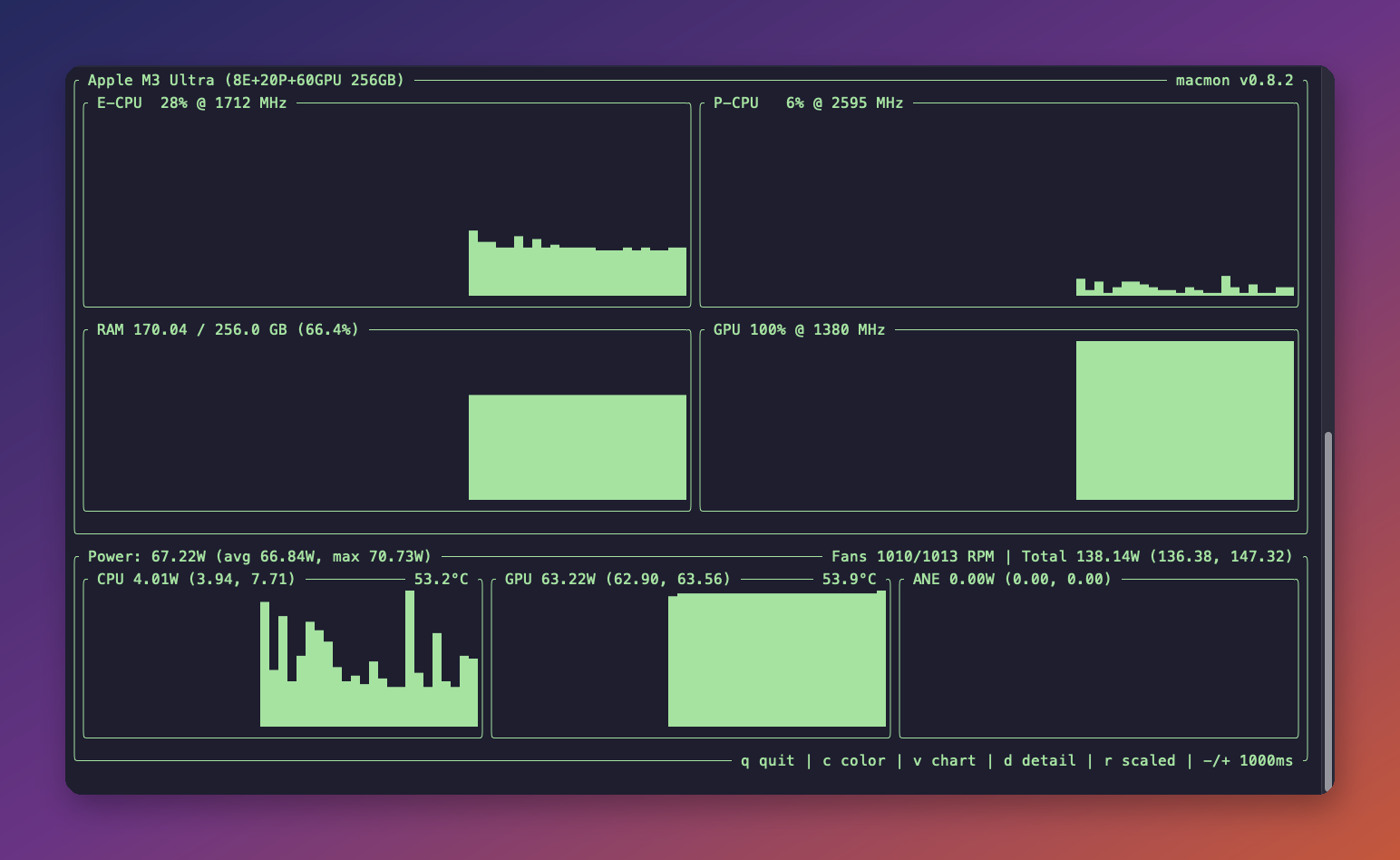
Ollama on the same machine generated the same model at about 14 tokens/s in my August testing, half of what llama-bench does with the same weights. Any Ollama-based comparison you read understates what the hardware can do, the Strix Halo row above included, and the reasons deserve their own post.
Why the M6 Mac mini isn’t the local LLM box
The M6 is Apple’s first 2nm chip, and the Mac mini it lives in is the best general-purpose small desktop you can buy for the money. I want to be precise about why it’s the wrong choice for this one job, because plenty of people are about to buy one for exactly this.
The base M6 Mac mini ships with 16GB of unified memory at 153 GB/s. The 24GB and 32GB configurations bump bandwidth to 170 GB/s. That’s about two-thirds of a Strix Halo box and about a fifth of my M3 Ultra. Qwen3.8 27B at Q4 fits in a 32GB mini with room to spare, but if generation scales with bandwidth the way it does everywhere else, expect around 6 tokens per second where mine does 28.8, and anything much larger than a 30B-class model doesn’t load at all.
The M5 Pro Mac mini is the version of this box that makes sense. Same five-by-five footprint, 307 GB/s, and it configures up to 64GB. That’s enough for the 27B dense models at Q8 and the 35B and 80B MoEs at Q4, at speeds above what the Strix Halo boxes manage on dense models. Amazon lists it from $1,669.99, Apple’s base configuration is 24GB, and the 64GB build is a configure-to-order option from Apple.
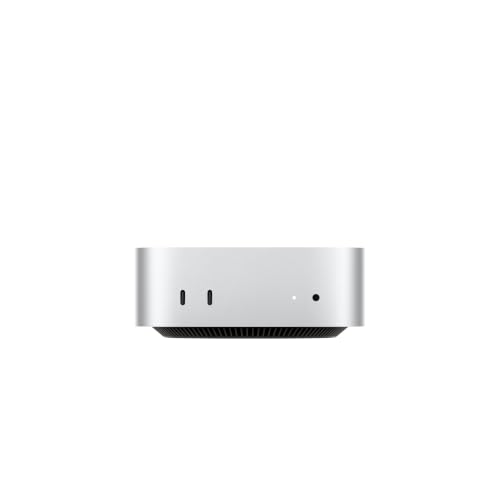
If you want an M6 Mac mini anyway, for everything else it does, the base model on Amazon is $879.99 and will run 8B-class models happily. Just don’t buy it for the 27B and up tier and then be disappointed.
Mac Studio M5 Max versus 128GB Strix Halo
This is the tier where most people asking the question should end up, and it’s closer than Apple fans or AMD fans want it to be.
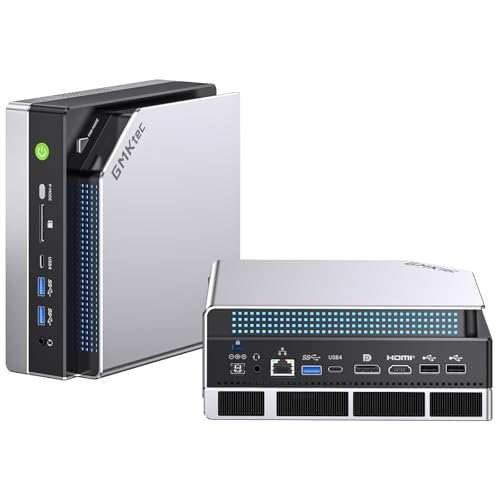
| Mac Studio M5 Max (40-core GPU, 64GB) | GMKtec EVO-X2 128GB | BOSGAME M5 128GB | Minisforum MS-S1 MAX 128GB | |
|---|---|---|---|---|
| Memory | 64GB (48GB or 128GB on the same chip) | 128GB LPDDR5X-8000 | 128GB LPDDR5X | 128GB LPDDR5X-8000 |
| Bandwidth | 614 GB/s | ~256 GB/s | ~256 GB/s | ~256 GB/s |
| Price | $3,499 from Apple (48GB is $3,099, 128GB is $5,099) | $3,499.99 | $3,499.00 | $3,799.00 |
| OS | macOS | Windows, Linux | Windows, Linux | Windows, Linux |
| Native Docker | No (VM) | Yes | Yes | Yes |
Apple’s $2,499 starting price buys the 32-core GPU at 460 GB/s with 36GB. The 614 GB/s figure needs the 40-core chip, which starts at $3,099 with 48GB, and the 64GB build that lines up with the Strix Halo boxes on price is $3,499. So for the same money the Strix Halo boxes give you 128GB where the Mac Studio gives you 64GB, and the Mac’s own 128GB build is $5,099. That’s the AMD argument, and it’s a good one: at 128GB you can load the 120B-class MoEs at Q4 and the 200B-class ones at aggressive quants, and the strix-halo-guide has repeatable llama-bench rows for most of them. You also get Linux, real Docker, and a machine that behaves like a server.
The Mac’s argument is the memory bus. At 614 GB/s the M5 Max has close to two and a half times the bandwidth, and on dense models that turns directly into tokens per second. It’s also quieter, and macOS is where MLX lives, which matters more this year than last.
So: if your workload is one big dense model and you want it fast, the M5 Max at 64GB, or 128GB if the budget stretches to $5,099. If your workload is “load the biggest MoE that fits and run an agent on it all night,” the 128GB Strix Halo box, and the 64GB EVO-X2 at $2,199.99 if you can live with half the memory. I went through the Strix Halo tiers in the local LLM mini PC guide if you want the longer version.
Who actually needs the M5 Ultra
The M5 Ultra Studio starts at $5,499 with 96GB, and the 256GB and 512GB configurations are where the launch-day excitement went. I can tell you what 256GB of unified memory is like to live with, because that’s my daily machine, just on the older chip.
Mostly it means I stopped asking whether a model would load. The 27B, 35B, 80B and 120B-class models I’ve tried this year all loaded on the first attempt, and the 1-bit 27B quant I benchmarked in August was something I ran out of curiosity. When a frontier model in the hundreds-of-gigabytes class shows up, the only decision is which quant.
What the M5 Ultra adds over mine is the bus. Fifty percent more bandwidth should mean something close to 50 percent more tokens per second on the dense models that already run here, and a better time on the big MoEs where the M3 Ultra starts to feel its age. Someone will run llama-bench on one soon enough. The 512GB configuration, arriving late October, keeps the ceiling the M3 Ultra set in 2025, where frontier models run at native or near-native precision, and puts the faster bus under it.
Who needs it: people running frontier-class models locally for work, and people who cluster. Apple’s clustering claim, up to three times the distributed inference performance over Thunderbolt 5 versus a single machine, is aimed at exactly that buyer. Who doesn’t: anyone whose largest model fits in 128GB, which is a $3,500 decision.
Gorgon Halo, if you can wait
The IFA announcements in early September complicate the Strix Halo half of this. AMD’s Ryzen AI Max+ PRO 495 is the successor part, and Minisforum’s IFA press release puts the numbers at 192GB of memory at 8533 MT/s, up to 160GB of it usable as graphics memory, and 131 TOPS. Two boxes were announced, the MS-S1 MAX-P495 workstation and the N5 MAX-P495 NAS. Chuwi showed a UniBox AI495 Pro with up to 192GB, and ACEMAGIC had a 495 machine on its IFA stand.
None of them have shipped, and the price signals are not encouraging. Minisforum’s own teaser, as VideoCardz reads it, points at around €7,000 for the 192GB workstation, with sales expected to begin in September, and Lenovo’s ThinkCentre X Ultra with the same chip is announced at €3,100 for November. For scale, Liliputing notes the previous-generation N5 MAX with 128GB sells for $2,399. At €7,000, 192GB of Gorgon Halo is M5 Ultra money, and the 128GB Strix Halo boxes stay the memory bargain. If a 192GB box shows up near Lenovo’s price, the M5 Ultra at 256GB gets a real competitor for the first time. The local LLM mini PC guide gets an update when there’s something to buy.
What I’d buy at each budget
| Budget | What I’d buy | Why |
|---|---|---|
| Under $1,000 | A Ryzen 7 6800H box with 32GB, or the base M6 mini if it has to be a Mac | Runs the 27B tier slowly and the small MoEs fine. On the 16GB M6, stay under 20B; the 32GB build is $1,299. |
| Around $2,000 | The 64GB EVO-X2 for Linux, or the M5 Pro Mac mini at 48GB ($2,299 from Apple) | The EVO-X2 runs everything up to the 80B MoEs. The 48GB mini stops at the 35B ones; the 64GB mini is $2,699. |
| $2,500 to $4,000 | The 128GB Strix Halo box | Bandwidth or memory, and I’d take memory: the interesting models keep getting bigger and the speed gap on MoEs is small. |
| $9,500 and up | M5 Ultra at 256GB | The $5,499 base is 96GB. The 256GB step adds $4,000, and it’s the configuration that justifies the spend. |
FAQ
Is the Mac Studio M3 Ultra still worth buying used or refurbished? Yes, if the price has fallen far enough. Bandwidth is about two-thirds of the M5 Ultra and the 256GB configuration runs everything I’ve thrown at it. Watch the used market after September 22 when the new units start arriving.
Can a Mac mini M6 run a local LLM at all? It can. 8B models at Q4 run comfortably in 16GB, and a 32GB configuration loads 27B-class models. Speed is the problem: 170 GB/s of bandwidth means the larger models generate at single-digit tokens per second.
Why does Strix Halo match the Mac on prompt processing but lose on generation? Prompt processing is compute-bound and both GPUs have plenty. Generation is memory-bandwidth-bound, and the Mac’s bus is roughly three times wider. The gap you see in practice is smaller than three to one because the software stacks and model size both matter.
Should I wait for Gorgon Halo? Not for the price. The Minisforum teaser points at around €7,000 for 192GB, which is M5 Ultra money. Wait if you want 192GB on Linux in one box and can sit out the autumn; if you need the machine this month, the 128GB Strix Halo boxes are mature and well documented.
Resources
- Apple’s Mac Studio tech specs, the source for every bandwidth figure above
- AMD side: the strix-halo-guide benchmark repository, and Minisforum’s Gorgon Halo announcement
- On this site: the best mini PC for local LLMs guide, the Qwen3.8 27B numbers, and the OpenClaw Mac mini alternatives post this one grew out of
Some links above are Amazon affiliate links. If you buy through them, this site earns a small commission at no extra cost to you.
More memory than you think you need is the right amount. 🍎
Last updated: September 2026